Understanding New York City Hardiness Zones for Urban Planters
New York City gardeners often see a hardiness zone on a plant tag and wonder whether it can tell them what to grow on a balcony, roof, or small patio. It can help, but it does not account for every urban condition. This guide explains what the zone means, how to use it, and what else to check before choosing plants for containers.
What a hardiness zone can tell you
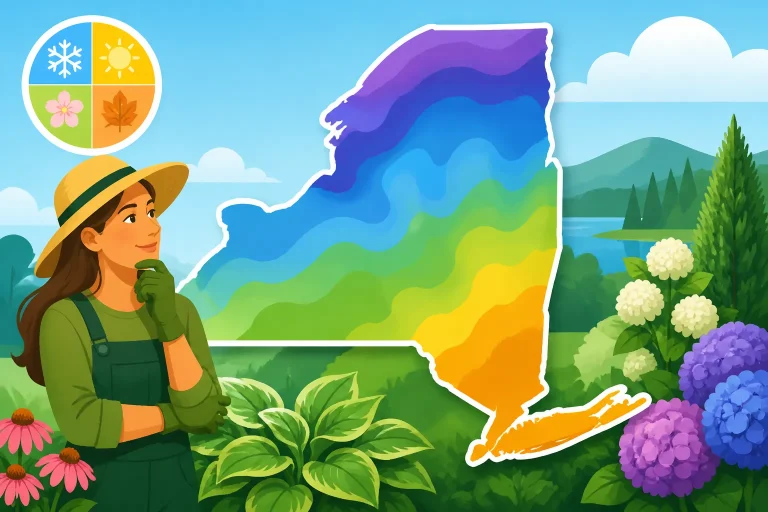
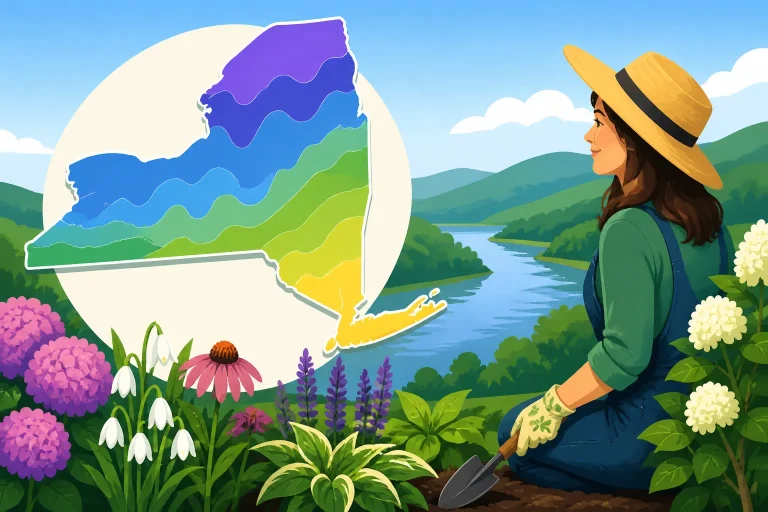
The USDA Plant Hardiness Zone Map groups places by their average annual extreme minimum winter temperature. The map uses temperature ranges, with smaller subdivisions within those ranges. A plant’s listed hardiness zone indicates the winter cold it is generally expected to tolerate when established in the ground.
That makes a zone useful when you are choosing long-lived plants: shrubs, trees, and perennials that need to survive winter outdoors. If a plant is rated for colder conditions than the place where it will grow, its listed hardiness suggests it may be able to withstand the area’s typical winter minimum. But hardiness is not a promise of survival. A sudden severe cold spell, a young or unhealthy plant, or a poorly drained pot can still cause damage.
Hardiness zones are less useful for deciding when to sow vegetables, move seedlings outdoors, or expect a last spring frost. The map describes a long-term winter-temperature pattern, not the timing of seasonal weather. Two neighborhoods that fall in the same zone can have different spring conditions, and an unusually cold or warm winter can depart from the long-term pattern.
For practical decisions, treat the zone as one filter among several:
- Use it to screen perennial plants. It can help rule out plants that are not suited to the expected winter cold.
- Check the plant’s other needs. Sunlight, soil or potting mix, drainage, moisture, and mature size are just as important.
- Account for where the pot will sit. A sheltered balcony and an exposed rooftop can experience very different conditions, even when they are close together.
- Use frost information for timing annual crops. For vegetable sowing and transplanting, local frost patterns and soil conditions are more relevant than the hardiness zone.
For a broader explanation of how zones and planting dates differ, see Hardiness Zones and Sowing Dates: What Your Zone Tells You. If you are deciding when to put tender vegetables outside, Why Frost Dates Matter More Than Hardiness Zones for Sowing Crops explains why winter hardiness alone cannot answer that question.
A zone is a starting point, not a complete urban planting plan. It can help you narrow a list of possible plants, but a container’s exposure, size, and location often determine whether that plant gets through winter successfully.
How to check a New York City location on the map
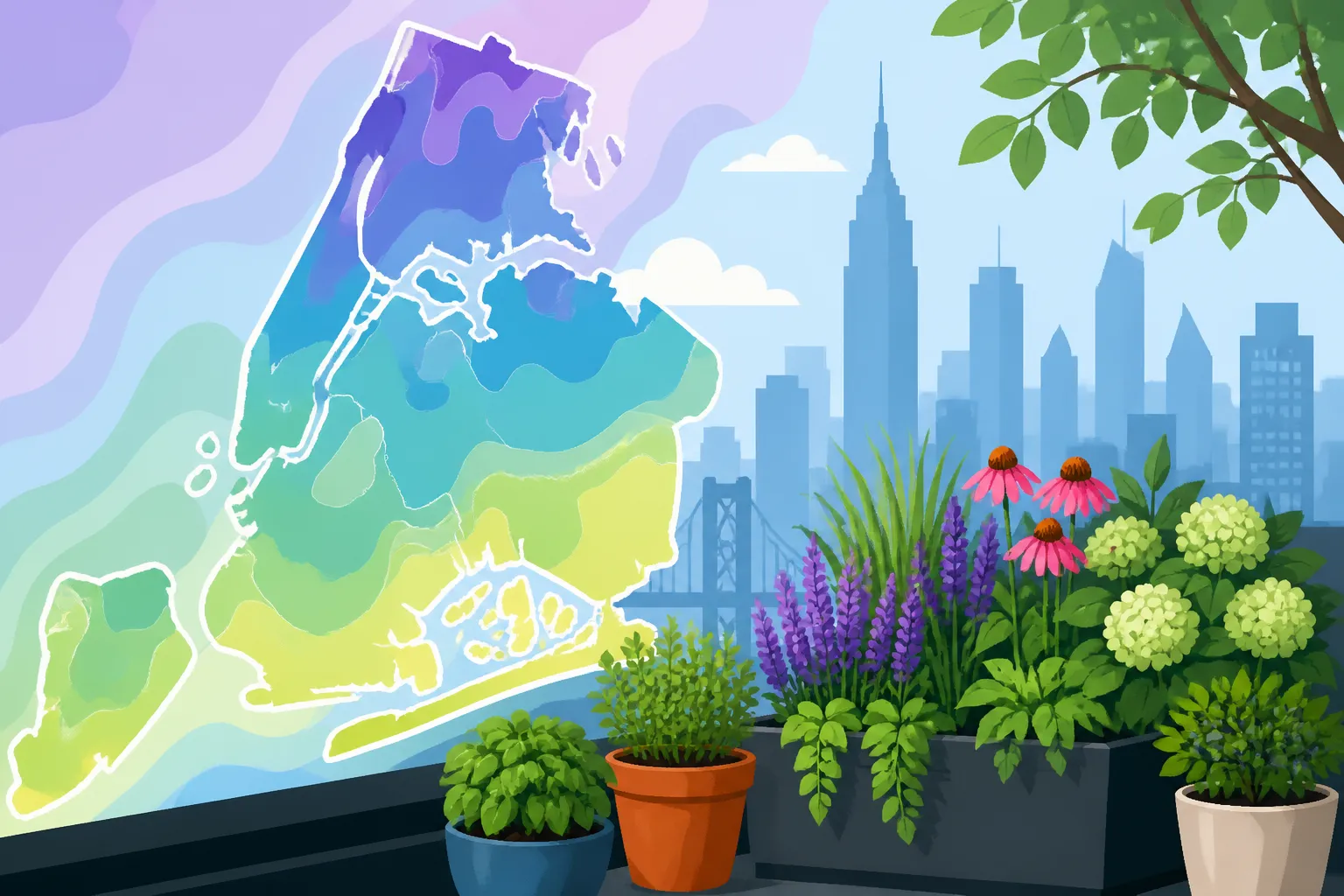
New York City does not have one uniform growing environment. The official USDA Plant Hardiness Zone Map is a useful way to check the mapped zone for an area, but it should not be treated as a precise reading for a particular balcony, courtyard, or rooftop.
Start with the map’s search or location tools and look up the general area where you garden. A ZIP code can be a convenient starting point, but it covers more ground than a single planting site. The mapped result describes an area, not the temperature at an individual address. Nearby blocks may also differ in exposure, building density, elevation, and proximity to open water.
When you check the map:
- Look up the area where the garden is located. Use the official USDA Plant Hardiness Zone Map, rather than relying only on a plant label, online comment, or general citywide description.
- Note the map result, but keep its scale in mind. It is a regional estimate, not a guarantee that every outdoor spot within that area has the same winter conditions.
- Compare the result with the plant’s hardiness information. If the plant is suited to warmer conditions than the mapped area, consider whether it can be moved indoors or protected, or choose a more cold-tolerant option.
- Assess the actual growing spot. Observe whether it is wind-exposed, shaded by buildings, open to the sky, or close to a heated wall.
- Check the plant’s care requirements beyond hardiness. A plant can be winter-tolerant and still fail in a small pot that dries out, stays waterlogged, or gets too little light.
A ZIP code lookup should not be read as an exact address-level prediction. Maps are built from broad climate patterns and can smooth over differences between a sheltered courtyard and a roof several floors above the street. For additional context on finding a mapped zone without treating a ZIP code as a precise answer, see New York Hardiness Zones: Finding Your Growing Zone by ZIP Code.
It also helps to keep a simple record of your own site. Note where each pot sits, whether it is exposed to wind, how much direct sun it gets, and how plants fare through winter. Your observations do not replace the map, but they can reveal recurring conditions the map cannot show at container scale.
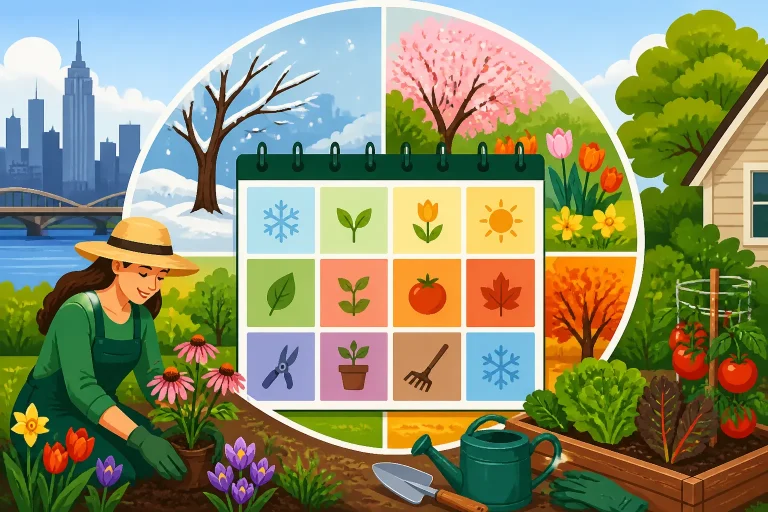
If you are planning a mix of edible crops and ornamentals, use different tools for different decisions. The zone can help screen a long-lived rosemary, shrub, or perennial. A vegetable calendar is better for timing short-season crops. Month-by-Month New York Home Garden Calendar and Checklist can help organize seasonal tasks, while Adjusting Planting Calendars for Your Local New York County addresses the need to adapt timing to local conditions.
Why city microclimates matter to urban planters
A microclimate is the set of conditions in a particular growing spot. In a city, those conditions can change over a short distance. Buildings absorb and release heat, walls can block wind, pavement can hold warmth, and open roofs can be exposed to strong sun and air movement. These differences influence plants independently of the mapped hardiness zone.
A sheltered courtyard may receive less wind and may stay warmer than a nearby open area. A rooftop, by contrast, can have strong wind, direct sun, and rapid temperature swings. A balcony beside a sunlit brick wall may heat up quickly in the afternoon, while a recessed balcony facing a shaded courtyard may receive much less light. None of these settings should be assumed to have one fixed advantage: warmth can help with cold, but heat and drying winds can stress plants in summer.
Observe the site before buying
Spend a few days observing the spot at different times, and repeat the check in more than one season if possible. Look for:
- Sun exposure. Count the hours of direct sun and note when it reaches the pot. A sunny morning and a hot afternoon are not the same growing condition.
- Wind. Notice whether air passes freely across the balcony, roof, or patio. Wind can dry foliage and potting mix faster, and can make winter exposure harsher.
- Shelter. A wall, overhang, or nearby building may reduce wind or block rain. It can also cast shade or create a warmer pocket.
- Water access and runoff. A site that receives rain may still have pots sheltered beneath an overhang. Check whether containers drain freely and where excess water goes.
- Heat from nearby surfaces. Dark paving and walls can make a small site hotter than a planting area surrounded by soil and vegetation.
- Weight and stability. On balconies and rooftops, consider the safe placement of planters and supports. Check building guidance or local requirements if you are unsure what the structure can hold.
Microclimates can make a location behave differently from the broader area on the map, but they do not turn a plant’s needs upside down. A warm wall cannot compensate for a plant that needs more sunlight than the site receives, and a sheltered spot does not guarantee survival if a container’s roots freeze repeatedly.
Compare the map with the growing spot
The following comparison can help you translate a general zone lookup into practical decisions:
| Growing spot | Conditions to watch | How the zone helps | What to do next |
|---|---|---|---|
| Sheltered courtyard | Shade, limited airflow, nearby walls | Screens out plants poorly suited to the area’s winter cold | Check light needs, drainage, and whether rain reaches the pots |
| Open balcony | Wind, drying, rapid exposure changes | Offers a broad winter-hardiness reference | Choose stable containers and plants suited to the site’s light and exposure |
| Rooftop | Strong wind, full sun, fast drying, temperature swings | Helps screen plants for general winter tolerance | Check building guidance for safe planter placement and monitor water closely |
| Sunlit wall or ledge | Heat, reflected light, uneven moisture | Provides regional context, not a prediction of summer performance | Choose plants that tolerate the actual light and keep potting mix from drying excessively |
| Shaded north-facing site | Low direct sun and potentially slower drying | Helps assess winter tolerance only | Prioritize plants suited to shade and make sure pots do not remain waterlogged |
This table is a starting checklist, not a claim that all rooftops, courtyards, or balconies behave alike. The height, orientation, nearby buildings, and protection from wind all matter. A narrow street-level courtyard can be shaded and still have heat-reflecting walls; an upper-floor balcony can be sunny but exposed. Assess the planting site itself rather than assigning it a character based only on its location in the city.
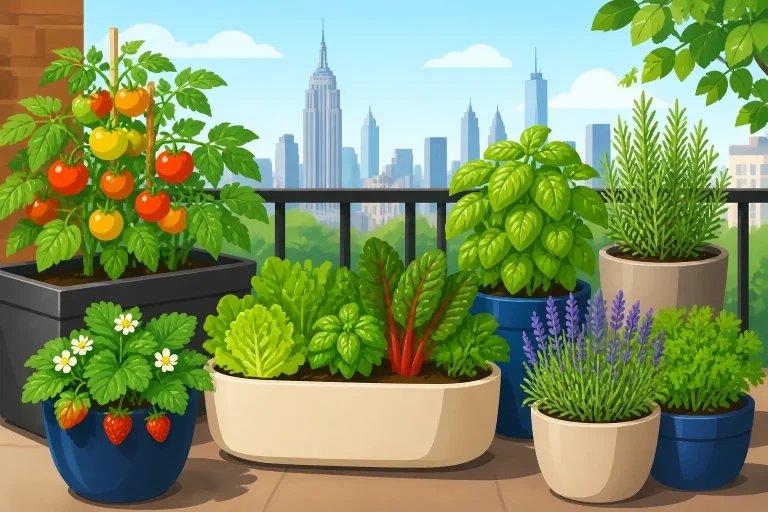
For help considering the special conditions of patios and containers, Crops and Herbs That Thrive in Outdoor Patio Planters and Adjusting Planting Dates for Mild Urban Microclimates offer related considerations. The first focuses on plants suited to outdoor planters; the second addresses why urban conditions can shift planting decisions.
Choosing plants and containers with winter in mind
A plant that survives winter in the ground may be less reliable in a container. In a garden bed, roots are surrounded by soil, which changes temperature more slowly than the air. In a pot, roots are surrounded by a smaller volume of potting mix exposed on multiple sides. That makes container roots more vulnerable to temperature swings and drying.
This is why a plant’s listed hardiness does not automatically mean it will overwinter safely in a small pot on an exposed balcony. The listed rating is a useful starting point, but the container and site change the conditions around the roots.
Match the plant to both its zone and its site
When choosing a perennial, shrub, or small tree, check these factors together:
- Winter hardiness: Use the mapped area as a broad reference for winter survival.
- Light: Match the plant’s sunlight needs to the hours of direct sun your site receives.
- Mature size: Check the expected size before selecting a plant for a small balcony or courtyard.
- Root and container needs: Consider whether the plant can grow in a pot of a suitable size, with enough drainage.
- Moisture: Wind and summer sun may dry containers quickly, while a shaded, sheltered pot may stay damp longer.
- Maintenance and movement: Decide whether the container can be moved to a more sheltered spot or protected when conditions become severe.
A perennial that is marginal for the mapped area may be a better choice if it can be moved to a protected location, but moving it does not erase all risk. A large, heavy planter may not be practical to relocate, and a sheltered position can still experience cold. If a plant’s hardiness range is unclear or the site is particularly exposed, a more cold-tolerant choice is usually the lower-risk option.
Give the roots a suitable container
Container size affects how quickly potting mix warms, cools, and dries. A very small pot can be difficult to keep evenly moist in summer and may expose roots to stronger cold in winter. Larger containers generally provide more volume for roots and moisture, but they also take more space and may be heavy when filled and wet.
Before planting, check that the pot has drainage openings and that the growing medium drains without drying out too fast for the plant. Do not assume a layer of stones at the bottom fixes poor drainage; the potting mix, drainage openings, and watering habits all matter. Choose a container stable enough for the site, particularly where wind can tip or shift it.
For edible crops, select a pot that suits the crop’s root system and growth habit. Leafy greens and herbs can fit in different container sizes than a large fruiting vegetable, and a plant that grows vigorously may need more room than a small seedling suggests. Container Vegetable Gardening Guide for Small New York Spaces covers container planning for vegetables, while Choosing Potting Soils for Container Vegetables in New York focuses on growing medium.
Decide how you will manage winter
Before buying a perennial for an outdoor pot, decide what winter care is realistic. Options may include moving a container to a more protected place, grouping pots in a sheltered location, or choosing a plant better suited to remaining exposed. What is practical depends on the pot’s weight, the available space, and the conditions at the site.
Do not assume a container can be placed anywhere without checking. Building rules, rooftop access, and safe load limits may affect what you can keep outside. Confirm local or building requirements where needed. Also consider wind: a plant may tolerate cold but be damaged by persistent exposure or by a container that can shift.
If you cannot provide winter protection and the site is exposed, prioritize plants rated for colder conditions than the mapped area rather than choosing a marginally hardy plant and hoping the microclimate is favorable. This is a risk-reduction approach, not a guarantee.
Using hardiness zones alongside a planting calendar
For urban planters, the most useful approach is to separate winter-survival decisions from planting-time decisions. Hardiness zones can help you judge whether a perennial is a plausible choice. They do not tell you when to plant warm-season vegetables, whether a spring seedbed is ready, or whether a particular week is safe for tender transplants.
Vegetables also differ in what they can tolerate. Cool-season crops can often be planted under conditions that would be unsuitable for tender warm-season crops. Soil warmth, forecast conditions, exposure, and the maturity time of the crop all affect the decision. In a container, the potting mix may warm or cool differently from in-ground soil, and wind or reflected heat can affect seedlings.
Use a planting calendar as a planning tool, then adjust it to conditions at your site:
- For seeds, check the crop’s requirements and the condition of the potting mix. Hardiness-zone labels are not a substitute for germination and sowing guidance.
- For transplants, consider both outdoor temperature and exposure. A tender plant on an exposed balcony may need more protection than one in a sheltered garden.
- For cool-season crops, use crop-specific timing. Some tolerate chilly conditions better than others, but young plants can still be stressed by abrupt weather changes.
- For warm-season crops, wait for suitable conditions. A mild afternoon does not necessarily mean nights or containers are warm enough.
- For perennials, check winter suitability before planting. This is where the zone map is most directly useful.
The local frost date is not a fixed appointment. It represents a probability based on historical patterns, and actual conditions vary from year to year. A citywide average also may not match an exposed roof or shaded courtyard. Use the local forecast and your site observations as planting time approaches, and avoid treating one date on a calendar as a guarantee.
For crop timing, New York Vegetable Planting Calendar by Freeze Dates and Spring and Fall Planting Windows for Cool-Season New York Crops can help connect seasonal planning to crop needs. For tender vegetables, Setting Out Warm-Season Vegetables After Spring Frosts explains the separate question of when to move them outdoors. Those timing decisions should not be confused with whether a perennial can survive winter in a pot.
A simple plan can combine both kinds of information:
- List what you want to grow. Separate long-lived plants from annual vegetables and herbs.
- Check the map for winter context. Use the mapped area as a general screen for perennial choices.
- Inspect the actual site. Record light, wind, shelter, and how quickly pots dry.
- Check each plant’s full requirements. Confirm its light, moisture, size, and container needs in addition to hardiness.
- Use crop-specific timing for vegetables. Follow a planting calendar and adjust for current local weather and the conditions of the containers.
- Review the plan before winter. Decide which pots can remain outside and which need a more protected location.
This avoids a common planning mistake: using one number to answer several different questions. The zone can inform winter suitability, a planting calendar can guide seasonal timing, and direct observation can show how your particular balcony or patio behaves. Together, they provide a more useful basis for choosing plants than any one of them can provide alone.
Frequently Asked Questions
Does New York City have one hardiness zone?
A citywide label does not describe every growing site. Check the official USDA Plant Hardiness Zone Map for the area, then account for differences in exposure, buildings, wind, and container conditions.
Can I use my ZIP code to choose plants?
A ZIP code can help you find the general mapped area, but it is not an exact reading for an address or balcony. Use the result as a starting point and assess the actual site.
Does a hardiness zone tell me when to plant vegetables?
No. The zone is primarily a guide to average winter cold and perennial survival. Vegetable planting depends on crop needs, seasonal weather, frost risk, and soil or potting-mix conditions.
Will a plant rated for my zone survive winter in a pot?
Not necessarily. Container roots can be more exposed to cold and temperature swings than roots in the ground. Pot size, drainage, wind exposure, plant health, and winter shelter all affect the outcome.
Disclaimer
This article is for general informational purposes only and does not constitute professional advice. Laws, prices and regulations vary by location and change over time. Consult a qualified professional for guidance on your specific situation. New York Gardening Guide is not a government agency and is not affiliated with any university extension, state department of agriculture or other government agency.