Hardiness Zones and Sowing Dates: What Your Zone Tells You
A hardiness zone can help you choose plants that survive New York winters, but it cannot tell you when to sow vegetables. Gardeners who use zone numbers as planting dates risk putting seeds into cold, wet soil—or waiting too long for a fall crop. The key is to use zones for winter survival and local frost patterns, soil conditions, and crop needs for sowing decisions.
What a hardiness zone measures
The USDA Plant Hardiness Zone Map groups locations by their average annual extreme minimum winter temperature. In other words, a zone is a rough indicator of how cold a place typically gets in winter. It is most useful when choosing perennial plants, trees, and shrubs that need to survive outdoors year after year.
A hardiness zone does not describe every aspect of a garden’s climate. It does not tell you how long the growing season lasts, when the ground will warm in spring, how often frost occurs in autumn, or whether a particular bed stays damp. Those details matter greatly for vegetables and other annual crops.
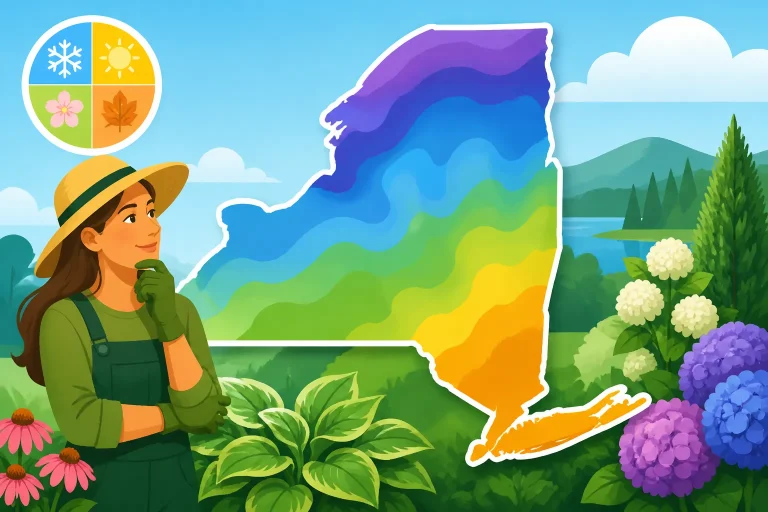
A ZIP code or broad area can fall in a zone on the USDA Plant Hardiness Zone Map, but that does not mean every yard within it has the same growing conditions. Elevation, slope, nearby buildings, bodies of water, and exposure to wind can all affect the temperatures plants experience. For an overview of regional differences, see Finding Your USDA Hardiness Zone Across New York State.
Where zones help
Use the zone map as one screening tool when you are selecting plants that must live through winter outdoors. If a plant is rated for winters warmer than the conditions your location commonly experiences, it may be damaged or killed without protection. A plant rated for colder winters may be more likely to survive, though hardiness is not a guarantee of success.
Zone information can also help with the winter survival of perennial herbs, fruit plants, and landscape plants. It is less useful for deciding when to put a packet of lettuce, beans, or tomatoes in the ground. Those crops complete their life cycle in one season, so the immediate growing conditions matter more than winter minimums.
Where zones do not help
A zone number does not tell you:
- The last spring frost date or first autumn frost date in your garden
- Whether the soil is warm enough for a particular seed to germinate
- How many frost-free days remain for a crop to mature
- Whether a seedling can tolerate a light frost
- Whether a warm, sunny stretch will be followed by another cold spell
- How much a bed’s temperature differs from the nearest weather station
For those questions, use local frost information, the crop’s temperature needs, and conditions in the bed itself. Why Frost Dates Matter More Than Hardiness Zones for Sowing Crops explains why these two kinds of information serve different purposes.
Why sowing dates depend on more than a zone
A good sowing date is a decision based on several factors working together, not a date printed beside a zone number. In New York, regional differences can be substantial: a sheltered urban garden, a coastal site, a valley, and an exposed or elevated bed may experience spring warmth and autumn cooling at different times.
Frost records are useful for planning, but average dates are probabilities, not promises. A local average does not guarantee that frost will occur on a particular day or that the next night will be safe for tender plants. Use the average as a planning reference, then pay attention to the forecast and the actual conditions around your garden.
The length of the usable growing season matters too. A crop may tolerate the temperature at planting but still need more warm days to mature than the season is likely to provide. This is especially relevant for crops that need a long, warm stretch, and for fall plantings that have to mature before daylight shortens and temperatures drop.
Frost tolerance changes the timing
Some vegetables can handle cool conditions and light frost better than others. That makes them possible choices for early spring sowing or late-season harvests. Tender crops, by contrast, can be harmed by frost and generally need warmer conditions before sowing or transplanting outdoors.
Even within a crop group, varieties can differ in days to maturity and temperature preferences. A label’s maturity estimate is a planning aid, not a guarantee: weather, soil, light, and plant health affect how quickly a crop develops. For spring planning, Cool-Season Crops That Tolerate Light Spring Frosts offers a useful way to think about which crops can go out earlier and which need more warmth.
Soil can lag behind the air
A sunny afternoon does not necessarily mean the soil is ready for planting. Cold, wet soil can delay germination and make it harder for young roots to establish. Seeds also have different temperature requirements, so a single soil reading cannot serve as a universal green light for every crop.
Check the soil in the bed where you plan to sow, rather than relying only on a weather report or the temperature near the house. A soil thermometer can help you track whether conditions are trending warmer. For more on this check, see Testing Soil Warmth in Early Spring: When Is Dirt Ready to Sow? and Using Soil Thermometers to Gauge Safe Spring Seeding Windows.
Soil texture and drainage affect how a bed warms and dries. A heavy, waterlogged bed may remain chilly after a lighter, well-drained one has become workable. Avoid sowing or digging when the soil is wet enough to smear or compact under pressure. Waiting for workable soil is often more useful than trying to match a calendar date exactly.
Microclimates shift the schedule
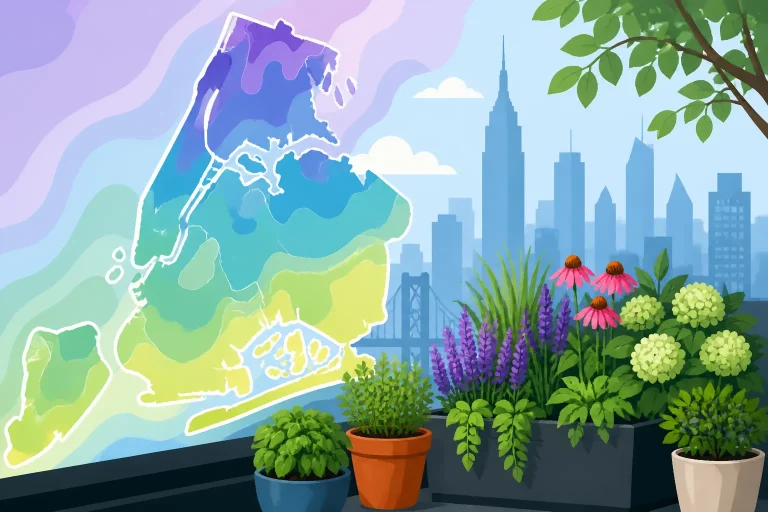
A sheltered bed near a sun-warmed wall may warm earlier than an exposed garden. A low spot may collect cold air, while a slope can drain it away. Wind exposure, shade, paving, and nearby buildings can also change how quickly soil warms and how much protection plants receive.
These local differences do not make regional guidance useless. They mean you should treat it as a starting point and adjust after observing your own garden. How Elevation and Slope Change Local Frost Timing in New York and Adjusting Planting Calendars for Your Local New York County cover two important reasons that a neighbor’s schedule may not fit your beds.
A practical way to turn zone information into sowing decisions
Use your zone to make broad winter-survival decisions. For vegetable sowing, build a separate plan around frost risk, crop tolerance, soil readiness, and the time a crop needs to mature. This approach is more reliable than trying to convert a zone number into a calendar date.
- Check the zone for winter survival. Use it when deciding whether a perennial plant is likely to survive outdoors. Do not use it as the date to sow a vegetable.
- Find a local frost reference. Look for average spring and autumn frost information that applies to your area. Remember that it is a probability, not a fixed deadline. How to Read Spring Freeze Probability Normals for Garden Sowing explains how to use those averages.
- Sort crops by temperature tolerance. Separate frost-tolerant or cool-season crops from crops that need warm soil and frost-free conditions.
- Check the bed, not just the calendar. Assess soil temperature, moisture, and workability. A cold or saturated bed may not be ready even when the season seems to have arrived.
- Read the seed packet. Check sowing depth, spacing, temperature guidance, and days to maturity. A Botanical Interests seed packet, like any packet, can help you find the crop-specific instructions; compare those instructions with your local conditions rather than treating them as a guaranteed date.
- Watch the forecast before planting tender crops. A stretch of mild weather is not proof that spring frost risk has passed. Delay tender crops or prepare suitable protection if a cold night is forecast.
- Reassess for fall sowing. Count backward from the likely end of the growing season, allowing the crop time to mature and adjusting for slower growth as days shorten.
| What you are deciding | Information to use | What a hardiness zone contributes |
|---|---|---|
| Whether a perennial may survive winter outdoors | Plant hardiness rating and local winter conditions | A useful starting point |
| When to sow cool-season vegetables | Frost tolerance, local frost patterns, soil condition, and crop instructions | Little direct timing information |
| When to plant tender vegetables | Frost risk, soil warmth, forecast, and crop needs | Does not indicate a safe planting date |
| Whether a fall crop can mature | Days to maturity, remaining growing conditions, and likely autumn cooling | Does not show the remaining season |
| Whether a specific bed is ready | Soil warmth, moisture, drainage, and local exposure | Does not describe that bed’s microclimate |
Put spring crops in broad groups
For spring, think in groups rather than one statewide planting date. Hardy, cool-season crops are generally the first group to consider. They can often be sown or planted while the season is still cool, provided the soil is workable and the crop instructions support it. Some can tolerate light frost, but tolerance varies by crop and growth stage.
A second group includes crops that prefer warmth but can tolerate some cool weather once established. Their timing depends on the crop and local conditions, so do not assume they can go out with the earliest greens.
The most frost-sensitive group includes warm-season crops such as tomatoes, peppers, eggplant, beans, cucumbers, squash, and corn. These need warmer conditions than hardy greens. Sowing seeds into cold ground can lead to slow or uneven germination, while transplanting tender seedlings too early can expose them to damaging cold. For crop-specific timing, see When to Plant Warm-Season Crops in New York Gardens and Setting Out Warm-Season Vegetables After Spring Frosts.
Starting transplants indoors can give some warm-season crops a head start, but seedlings still need to be hardened off and moved outdoors when conditions are suitable. A plant that has grown well indoors is not automatically ready for a chilly bed or a sudden drop in temperature. Indoor Seed Starting Timeline for New York Warm-Season Transplants can help with the indoor portion of that plan.
Plan fall planting backward
Fall sowing calls for a different calculation. Rather than asking when the season begins, estimate how much time a crop needs before autumn conditions slow growth or frost threatens the harvest. Use the packet’s days-to-maturity information as a guide, and allow for the possibility that plants may grow more slowly as daylight and temperatures decline.
Some crops are better suited to a fall garden because they grow quickly or tolerate cool weather. Others need a longer stretch of warmth and may not mature in time if sown too late. How Late Can You Sow Vegetables in New York for an Autumn Harvest? and Planning a Fall Vegetable Garden in New York Backyards address this kind of backward planning.
If your local autumn is unpredictable, consider whether a row cover, low tunnel, or cold frame could protect crops from some cold conditions. These structures can extend harvest opportunities, but they do not change a crop’s basic need for suitable growing conditions. Select protection that fits the crop and the weather you expect, and monitor covered beds so plants do not become too warm on sunny days.
Common mistakes when using zones for vegetable planting
Treating the zone as a planting calendar
Zone maps answer a winter-survival question. They do not provide a sowing calendar. Two gardeners whose areas fall in the same zone can have different spring frost patterns, soil warmth, and season lengths. Use the zone for its intended purpose, then make planting decisions with local weather and crop information.
Assuming the last average frost is a guarantee
Average frost information is a planning reference, not a promise that frost will stop after a particular date. A tender transplant placed outside just because an average date has passed can still be vulnerable to a cold night. Check the forecast, keep track of the bed’s conditions, and be prepared to delay planting or protect vulnerable plants.
Sowing because the air feels warm
A warm afternoon can be misleading when nights remain cold or the soil is still chilly. Seeds need suitable conditions where they are planted, not only a few hours of pleasant air temperature. Check soil warmth and moisture, and avoid working beds that are too wet.
Ignoring days to maturity
A crop that can grow in your area may still need more time than the season offers, especially when planted late or during a cool stretch. Compare maturity information for the variety with the expected growing window. For a better estimate of how weather affects crop timing, see How Local Weather and Variety Days to Maturity Affect Harvests.
Treating a cover as a substitute for timing
Row covers and cold frames can moderate some exposure, but they are not a guarantee against all damaging weather. They also need to be managed: a covered bed can warm quickly in bright sun. Use protection to extend a reasonable planting window, not to ignore crop temperature needs or forecast risks.
Copying a neighbor’s dates exactly
Nearby gardens can differ in shade, wind, slope, soil, and drainage. A neighbor’s successful planting date is a helpful observation, not a rule for every yard. Keep notes on when your soil becomes workable, when seedlings emerge, and how plants respond. Over time, those observations make regional recommendations more useful for your own microclimate.
Build a flexible calendar for your garden
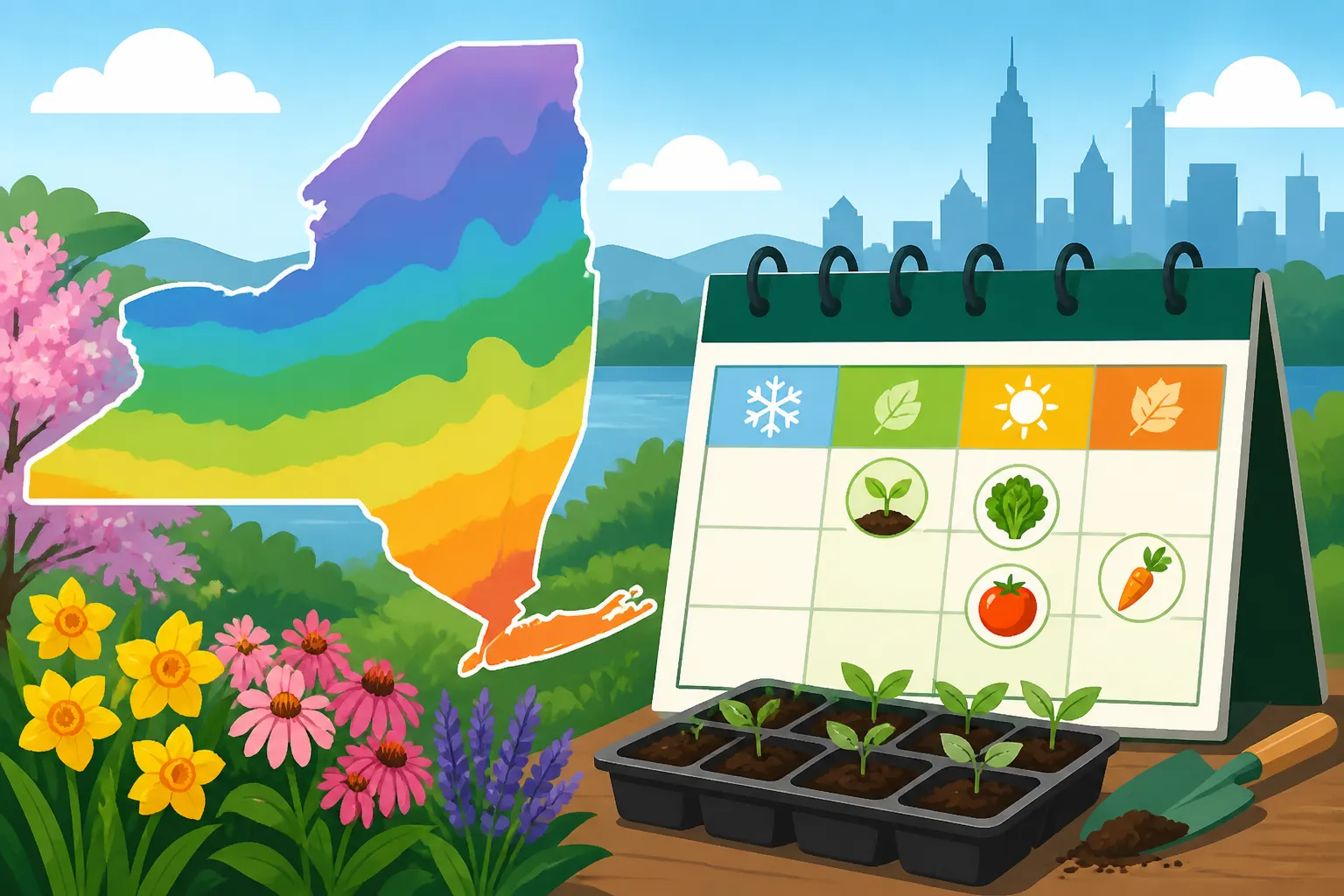
A useful New York planting calendar is a set of decision points, not a fixed schedule for every bed. Start with the broad season and crop group, then revise the plan as the weather and soil change. For example, you might note when the ground is usually workable, when cool-season crops can be considered, and what conditions you want to see before setting out tender transplants.
Record practical details as the season unfolds: sowing dates, soil conditions, frost events, germination, transplant losses, and harvest timing. These notes can help you see whether a bed warms early, whether a cold pocket affects a particular corner, and whether a variety regularly needs more time than its packet estimate suggests.
A simple calendar can include:
- Winter planning: Use hardiness information to assess perennial winter survival and choose crops or varieties suited to the time available.
- Early spring checks: Watch soil moisture and warmth, and begin with crops that tolerate cool conditions.
- Before tender planting: Check the local forecast, soil conditions, and crop instructions rather than relying on the zone.
- Summer succession planning: Leave enough time for new sowings to mature before autumn conditions limit growth.
- Fall planning: Work backward from the expected end of the growing season and choose crops with appropriate maturity times.
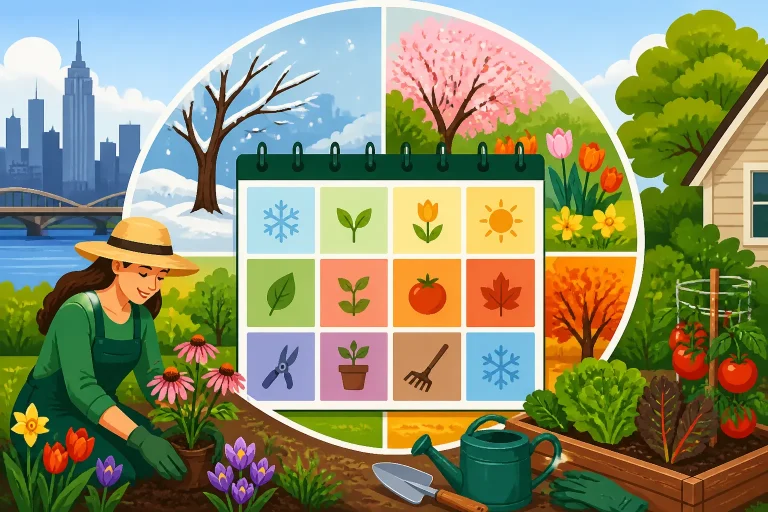
For a broader month-by-month framework, use Month-by-Month New York Home Garden Calendar and Checklist alongside crop-specific planting guidance. A regional calendar helps you anticipate what to check; your garden’s actual conditions help you decide whether to act.
The most useful distinction is straightforward: hardiness zones help estimate whether perennial plants can tolerate winter cold, while sowing dates depend on local frost risk, soil warmth, crop tolerance, and time to maturity. Use both kinds of information for the questions they answer, and treat dates as flexible planning tools rather than guarantees.
Frequently Asked Questions
Can I use my hardiness zone to choose a vegetable sowing date?
Not by itself. A zone describes average annual extreme minimum winter temperature, not spring soil warmth, frost dates, or the length of the growing season. Use local frost information and crop-specific guidance to plan sowing.
Do gardens in the same New York zone have the same planting dates?
No. Elevation, slope, shade, wind, drainage, and nearby buildings can create different conditions even within the same broad zone. Use local recommendations as a starting point and adjust to your own garden.
Should I plant tender vegetables after the average last frost date?
Treat the average as a reference, not a guarantee. Check the forecast, soil warmth, and the crop’s needs. Tender plants may still be at risk if cold weather returns.
Why do seed packets give days to maturity?
The estimate helps you judge whether a crop may have enough time to mature in your growing season. Actual development can vary with weather, soil, and growing conditions, so use it as a planning aid rather than an exact harvest promise.
Disclaimer
This article is for general informational purposes only and does not constitute professional advice. Laws, prices and regulations vary by location and change over time. Consult a qualified professional for guidance on your specific situation. New York Gardening Guide is not a government agency and is not affiliated with any university extension, state department of agriculture or other government agency.