Hudson Valley Plant Hardiness Zones for Gardeners
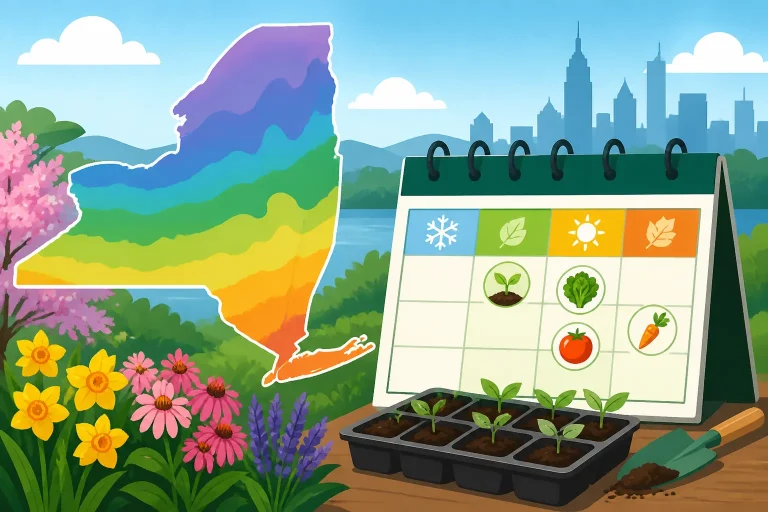
A plant tag may say a perennial is hardy in your zone, but the Hudson Valley’s hills, valleys, and built-up areas can give nearby gardens different winter conditions. The USDA Plant Hardiness Zone Map is a useful first filter—not a planting calendar or a guarantee that a plant will thrive. Here’s how to read it, account for your site, and use it alongside local weather and growing conditions.
How to Read the USDA Plant Hardiness Zone Map
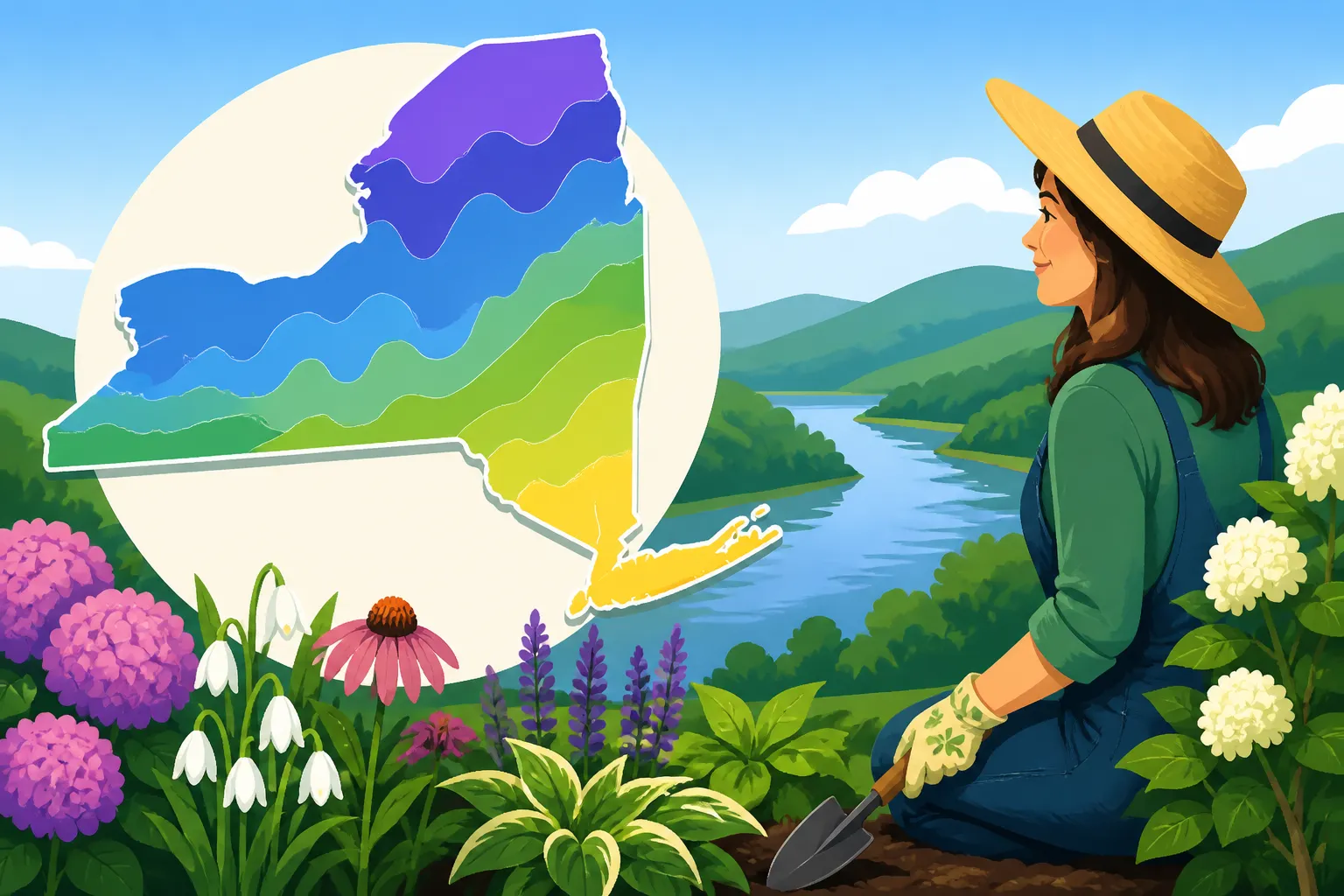
The USDA Plant Hardiness Zone Map groups places by their average annual extreme minimum winter temperature. Each zone represents a temperature band, and the map subdivides zones into smaller steps. A plant labeled hardy in a particular zone is generally expected to tolerate the winter cold associated with that zone once established.
That makes the map useful when comparing plants that must survive outdoors year after year. It can help you narrow the choices for a perennial border, shrub, or fruit tree before you spend time and money planting. If a plant’s stated hardiness is marginal for your mapped area, it may need a particularly suitable site—or may be a poor choice for an exposed location.
The map does not predict the lowest temperature your garden will experience in any particular winter. It is based on historical climate information, so it describes a pattern rather than a promise. A colder-than-usual winter can still damage a plant that usually survives in a location. Snow cover, soil moisture, wind exposure, plant health, and the timing of cold spells also affect winter survival.
The map is also not a measure of how much heat a plant can handle in summer. Nor does it tell you whether the soil stays wet, whether a site is shaded, or how long your growing season is. A plant may be winter-hardy on paper and still struggle because its roots sit in poorly drained ground or it gets too little sun.
For a Hudson Valley garden, start with the USDA map’s location information, then treat the result as a starting point. ZIP-code tools are convenient, but a ZIP code can cover more than one set of conditions. A map result is not a precise reading for every street, slope, or backyard. The broader map can help you orient yourself, but your actual planting site may be warmer or colder than the area around it.
For a statewide overview, see Finding Your USDA Hardiness Zone Across New York State. The important step is not to memorize a zone label. It is to understand what the label measures, then check whether the plant’s other needs match the place where you plan to grow it.
What a Hardiness Zone Can Tell Hudson Valley Gardeners
The Hudson Valley is not one uniform garden climate. Terrain, elevation, exposure, and nearby development can all affect local conditions. A valley floor, a hillside, and an open ridge may experience winter and spring weather differently, even when they are relatively close together. That is why a single regional label should not be treated as a precise description of every garden.
A hardiness zone can help you screen perennial plants. If a plant’s listed winter tolerance is a poor match for the local map result, consider a more cold-tolerant alternative or a sheltered planting position. If the plant is rated for conditions colder than your mapped area, it may be a reasonable candidate, provided its soil, light, and moisture needs also suit your site.
Use the zone as one piece of evidence, not the deciding factor. Before planting, look at the whole growing situation:
- Winter exposure: Open, windy sites can place more stress on foliage and stems than protected areas.
- Soil drainage: Roots that remain saturated may be damaged even if the plant tolerates cold.
- Snow cover: A consistent insulating layer can protect low plants, while wind-swept locations may have little cover.
- Spring conditions: A plant can survive winter but be vulnerable when new growth begins during a mild spell followed by a cold snap.
- Summer conditions: Heat, drought, and humidity tolerance are separate from winter hardiness.
- Plant establishment: A newly planted specimen may be more vulnerable than one that has had time to develop a healthy root system.
These differences matter especially when a plant is near the edge of its cold tolerance. A sheltered bed beside a building may offer protection from wind, while a low spot may collect cold air. A warm-looking site is not always a better one: heat reflected from pavement or walls can encourage early growth, which may be exposed to later cold.
Plant labels and nursery descriptions can also simplify a complicated topic. “Hardy” does not mean immune to every winter injury, and “marginal” does not mean a plant will always fail. Those descriptions are best understood as guidance about expected winter survival under suitable growing conditions. They cannot account for every yard or every unusual season.
For garden planning across more than one part of the state, Hardiness Zones and Sowing Dates: What Your Zone Tells You explains why hardiness and vegetable sowing dates answer different questions. The distinction is especially useful if you are choosing both long-lived landscape plants and annual vegetables.
Microclimates: Why Your Garden May Differ From the Map
A microclimate is a small area with conditions that differ from its surroundings. It can be created by slope, wind, shade, water, buildings, paving, vegetation, or other features. In the Hudson Valley, where terrain changes over short distances, noticing these local patterns can help explain why a plant thrives in one part of a property and struggles in another.
Slope and elevation
Cold air tends to move downhill and gather in low areas. A low garden spot may be more exposed to cold-air pooling than a nearby slope, particularly on clear, calm nights. A higher position can avoid some of that pooling but may be more exposed to wind. Elevation can also affect how quickly spring warmth arrives.
This does not mean every low spot is colder in every situation. Water, shade, shelter, and the shape of the surrounding land all matter. Pay attention to where frost lingers and where snow melts first. Those observations can help you decide whether a particular bed is suited to a tender perennial or whether a more protected location would be safer.
For more on this effect, see How Elevation and Slope Change Local Frost Timing in New York. The practical takeaway is to compare the actual planting site with the wider region rather than relying on a map label alone.
Wind and exposure
Wind can dry evergreen foliage and increase stress during winter, especially when the ground is frozen and roots cannot replace moisture lost through leaves. An exposed ridge or open yard may be less forgiving than a spot sheltered by a fence, hedge, or building. Shelter can help, but avoid placing a plant where poor airflow or persistent dampness creates other problems.
A newly planted shrub may need more care while it establishes than a mature one. Choose a site that fits the plant’s mature size and exposure needs rather than relying on temporary protection to compensate for an unsuitable location. For plants that are borderline for the area, a sheltered position may reduce risk, but it cannot change the region’s broader climate.
Buildings, pavement, and shade
Walls and paved surfaces can absorb and release heat, changing the conditions immediately around them. A south-facing wall may warm nearby soil earlier than an open bed. That can be helpful for some plants, but early warmth can also prompt growth before the risk of cold weather has passed. A spot beside a building is not automatically safer: reflected heat, limited airflow, roof runoff, and shade can all affect plant performance.
Trees and large shrubs create another kind of microclimate. Their shade can reduce summer heat, while their roots compete for water and nutrients. A sheltered woodland edge may offer a more moderate environment than a fully exposed bed, but it may also be too dry or too shady for a sun-loving plant.
Keep simple site notes
You do not need specialized equipment to make useful observations. Over a season, note where snow remains, where frost appears to linger, where spring growth begins earliest, and which places dry out quickly. Record plant performance by location. These notes will not replace a climate map, but they can help you make better decisions within your own garden.
If you are choosing plants for a site with unusual sun, wind, or moisture, compare those needs before buying. Soil Moisture and Light Checks Before Buying Native Species focuses on matching plants to site conditions, a step that matters just as much for other perennials and shrubs.
Using Hardiness Zones to Choose Plants and Plan Planting
For perennial plants, shrubs, and trees, the zone is a first screening tool. Check the plant’s stated cold tolerance, but also review its light, soil, moisture, and mature-size requirements. A plant that can survive winter in the region may still be unsuitable for a wet low bed, a dry slope, or a shaded corner.
Use a plant’s hardiness rating as a filter
Before choosing a long-lived plant, ask:
- Does its listed winter hardiness fit the map result for the general area?
- Is the planting spot more exposed or more sheltered than nearby locations?
- Does the plant tolerate the site’s soil moisture and drainage?
- Does it need full sun, partial shade, or a protected position?
- Is it likely to face winter wind, reflected heat, or spring temperature swings?
- Can it reach its mature size without crowding structures or nearby plants?
If several answers raise concerns, choosing a better-adapted plant is often more reliable than trying to compensate later. A small difference in site conditions can influence results, but a plant’s fundamental needs still matter.
Treat winter survival and spring timing separately
A plant’s ability to survive winter does not tell you when to plant annual vegetables or when to set out tender transplants. Vegetables are often scheduled around soil temperature, frost risk, crop maturity, and the length of the growing season. Those are different considerations from the long-term cold tolerance of a perennial.
For example, a warm-weather vegetable may be appropriate for the region but still be damaged by a late spring freeze if it is planted outside too early. A cool-season crop may tolerate some cold but can struggle in hot weather. To plan vegetables, use a local planting calendar and frost information rather than relying on a hardiness-zone label. Why Frost Dates Matter More Than Hardiness Zones for Sowing Crops explains this distinction, and Adjusting Sowing Windows Between Warm Valleys and Cold Plateaus addresses the way local terrain can shift timing.
Frost dates are estimates based on probabilities, not fixed appointments. A typical date does not guarantee frost-free weather before it or a freeze afterward. Keep a flexible plan, watch the forecast, and protect vulnerable plants when conditions warrant. For local annual-crop timing, Adjusting Vegetable Planting Dates for Your Local New York County offers a more relevant approach than using a zone label as a schedule.
Make the planting calendar fit the plant
Planting time depends on what you are putting in the ground. A bare-root tree, a container-grown shrub, a perennial, and a vegetable transplant can have different planting considerations. Soil condition and the plant’s stage of growth also matter. Avoid treating the word “spring” or “fall” as a precise date; in the Hudson Valley, local weather and site conditions affect when the soil is workable and whether a plant can establish well.
For annual vegetables, separate the garden plan into cool-season and warm-season crops. Cool-season crops can often be scheduled earlier than tender crops, but the right window varies with local conditions and crop type. Warm-season crops need suitable warmth, and a long-range calendar cannot remove the risk of a cold snap. The New York Vegetable Planting Calendar by Freeze Dates and Spring and Fall Planting Windows for Cool-Season New York Crops can help organize those decisions.
For perennials and landscape plants, consider whether the plant will have a reasonable opportunity to establish roots before the most stressful season. Follow the specific planting and care guidance for the plant, and avoid disturbing soil that is too wet to work. A suitable zone does not make a poor planting site or poor planting conditions suitable.
Reassess plants that struggle
If a plant repeatedly suffers winter injury, first look for an explanation beyond the zone label. Check whether the planting site is exposed to wind, drains poorly, warms too early, or has little snow cover. Consider whether the plant is healthy and well established, and whether its stated hardiness is a close fit for local conditions.
If the site is fundamentally unsuitable, moving the plant or replacing it with a better match may be more effective than repeated rescue attempts. A simple garden record can help you tell whether damage follows a particular winter pattern or whether the plant struggles in all seasons. Record where it is planted, what conditions it receives, and what kind of injury appears.
A Practical Way to Plan Around Hudson Valley Conditions
The most useful approach is to combine the map with observations and a seasonal plan. Think of the hardiness zone as a regional baseline, your garden’s microclimate as a local adjustment, and the planting calendar as a separate tool for deciding when to act.
| Planning question | Best information to use | What it helps you decide |
|---|---|---|
| Can a perennial or shrub usually survive local winter cold? | USDA Plant Hardiness Zone Map plus the plant’s hardiness information | Whether the plant is a reasonable candidate for the region |
| Is this particular spot suitable? | Sun, drainage, exposure, slope, and garden observations | Whether the plant’s needs match the bed |
| When should vegetables be planted? | Crop-specific timing, soil conditions, and local frost probabilities | When to sow or transplant annual crops |
| Why did a plant suffer damage? | Plant condition, winter exposure, moisture, and seasonal notes | Whether to change the site, care, or plant choice |
| Is an unusual year changing the plan? | Current local weather and forecasts | Whether to delay planting or protect vulnerable plants |
A workable process looks like this:
- Check the map for your general location. Use the USDA Plant Hardiness Zone Map to orient your choices, while remembering that a ZIP-code result may not reflect every part of a large area.
- Read the plant description carefully. Note winter tolerance and the plant’s requirements for light, water, and soil.
- Walk the planting site. Look for slope, cold-air pooling, shade, wind, paving, and drainage.
- Choose a planting window for the plant type. Use a vegetable calendar for annual crops and plant-specific guidance for perennials, trees, and shrubs.
- Keep the schedule flexible. Local weather can depart from averages; respond to conditions rather than treating calendar dates as guarantees.
- Record what happens. Notes on winter survival, spring growth, and summer stress can make future plant choices more precise.
If you are growing in containers, remember that the map describes the climate around the garden, not the protection available to a pot. Container roots are more exposed to temperature swings than roots in the ground. A plant that survives in a landscape bed may need additional protection when grown in a pot. Choose container plants with their growing conditions in mind and plan for winter care appropriate to the plant.
Likewise, a plant’s ability to live through winter is different from its ability to produce a reliable harvest. Fruit trees, berries, and vegetables can have requirements beyond cold tolerance, including pollination, adequate heat, moisture, and a suitable growing season. A zone rating alone cannot answer whether a crop will fruit well or ripen in a particular garden.
This distinction can prevent two common planning mistakes. The first is rejecting a plant simply because a broad map label seems unfavorable, without checking the actual planting site or the plant’s full description. The second is assuming that a favorable hardiness result means the plant will thrive, regardless of drainage, sun, or care. Both the map and the site matter.
For a broader seasonal checklist, Month-by-Month New York Home Garden Calendar and Checklist can help organize garden tasks. Use it alongside local observations, not as a substitute for them. In a region with varied terrain, a calendar becomes more useful when you adjust it to the conditions you actually see.
Frequently Asked Questions
Does a hardiness zone tell me when to plant vegetables?
No. A hardiness zone describes average winter cold and is mainly used to assess whether perennial plants may survive outdoors. Vegetable timing depends on the crop, soil warmth, frost risk, and growing-season needs.
Can two gardens in the Hudson Valley have different conditions?
Yes. Slope, elevation, wind, shade, pavement, water, and nearby buildings can create different conditions even in nearby gardens. A broad map result cannot describe every planting site.
Does a plant rated hardy for my area have to survive every winter?
No. The rating is a guide to expected cold tolerance, not a guarantee. An unusually harsh winter, poor drainage, winter wind, lack of establishment, or other stress can still cause damage.
Should I use my ZIP code to choose plants?
A ZIP-code lookup can be a helpful starting point, but it may cover a broad area and cannot account for every yard’s microclimate. Compare the result with your site and the plant’s specific needs.
Disclaimer
This article is for general informational purposes only and does not constitute professional advice. Laws, prices and regulations vary by location and change over time. Consult a qualified professional for guidance on your specific situation. New York Gardening Guide is not a government agency and is not affiliated with any university extension, state department of agriculture or other government agency.