Crops and Herbs That Thrive in Outdoor Patio Planters
Outdoor patio planters can make fresh vegetables and herbs possible even when a New York home has no garden bed. The challenge is choosing crops that suit the light, wind, heat, and limited soil volume of a particular patio. Match plants to those conditions, use containers with dependable drainage, and plan watering around how quickly pots dry.
Start with your patio’s growing conditions
A patio is not automatically a good growing spot just because it is outdoors. Sun exposure, reflected heat, wind, and access to water all affect which crops are likely to do well. Look at the space through the day before buying plants or seeds; conditions at the planting surface matter more than the general description of the yard.
Check the light where pots will sit
Observe how much direct sunlight reaches the exact spot for your planters, including the areas close to walls and railings. A sunny patio may have shaded corners, while a bright-looking area may receive little direct sun because of a roof, tree canopy, or neighboring building. Light can also shift as the season progresses.
Fruiting crops such as tomatoes, peppers, and eggplant generally need a sunny location to grow and produce well. Leafy crops such as lettuce and spinach can be more accommodating where the light is less intense, though shade can still limit growth. Herbs vary: basil usually suits a warm, sunny position, while parsley and chives can be more flexible. For help choosing plants by light level, see Sunlight Needs for Fruiting vs Leafy Backyard Vegetables and Windowsill to Patio: Container Vegetable Success with Shade.
If you have only a partly sunny patio, prioritize plants that tolerate those conditions instead of trying to force a crop that needs stronger sun. You can also place containers where they receive the brightest available light and move them if that is practical. A planter that is easy to reach and maintain is often more useful than one squeezed into a spot that looks attractive but is difficult to water or inspect.
Notice wind and reflected heat
Open patios, balconies, and rooftops may be windier than sheltered ground-level spaces. Wind can dry potting mix quickly, rock tall plants, and damage tender growth. A wall or railing may provide some shelter, but also create a hot pocket where leaves and containers heat up. Watch how the space behaves on warm, breezy days, and choose sturdy locations for tall or top-heavy pots.
Hard surfaces can reflect heat onto plants and warm containers more than nearby garden soil. This can be helpful for warmth-loving crops in a cool spell, but it can also make roots dry out quickly during hot weather. A light-colored container, a position with some afternoon shade, or a tray that does not trap excess water may help moderate stress. Avoid placing foliage directly against a hot wall if it shows signs of scorching or wilting.
Make the growing area workable
Think about how you will carry water, tend plants, and harvest. If planters are far from a tap, watering may become a chore, especially during dry weather. Heavy containers are difficult to move once filled, so decide on their location before adding growing medium. Check that the surface can support the containers and that water can drain without damaging the patio or affecting neighbors below.
A compact layout can still support a useful mix of crops. Keep room to reach into each pot, inspect leaves, and harvest without brushing against every plant. Tall plants can shade shorter ones, so arrange them with the patio’s light direction in mind. A trellis or other support can help a climbing crop grow upward, but it also catches wind and needs to be secured appropriately.
Choose crops that fit the container
The best patio crops are not necessarily the smallest plants. Look for a good match among the plant’s mature size, root needs, support requirements, and the amount of care you can provide. A productive container is one that gives its crop enough room and stays manageable through the season.
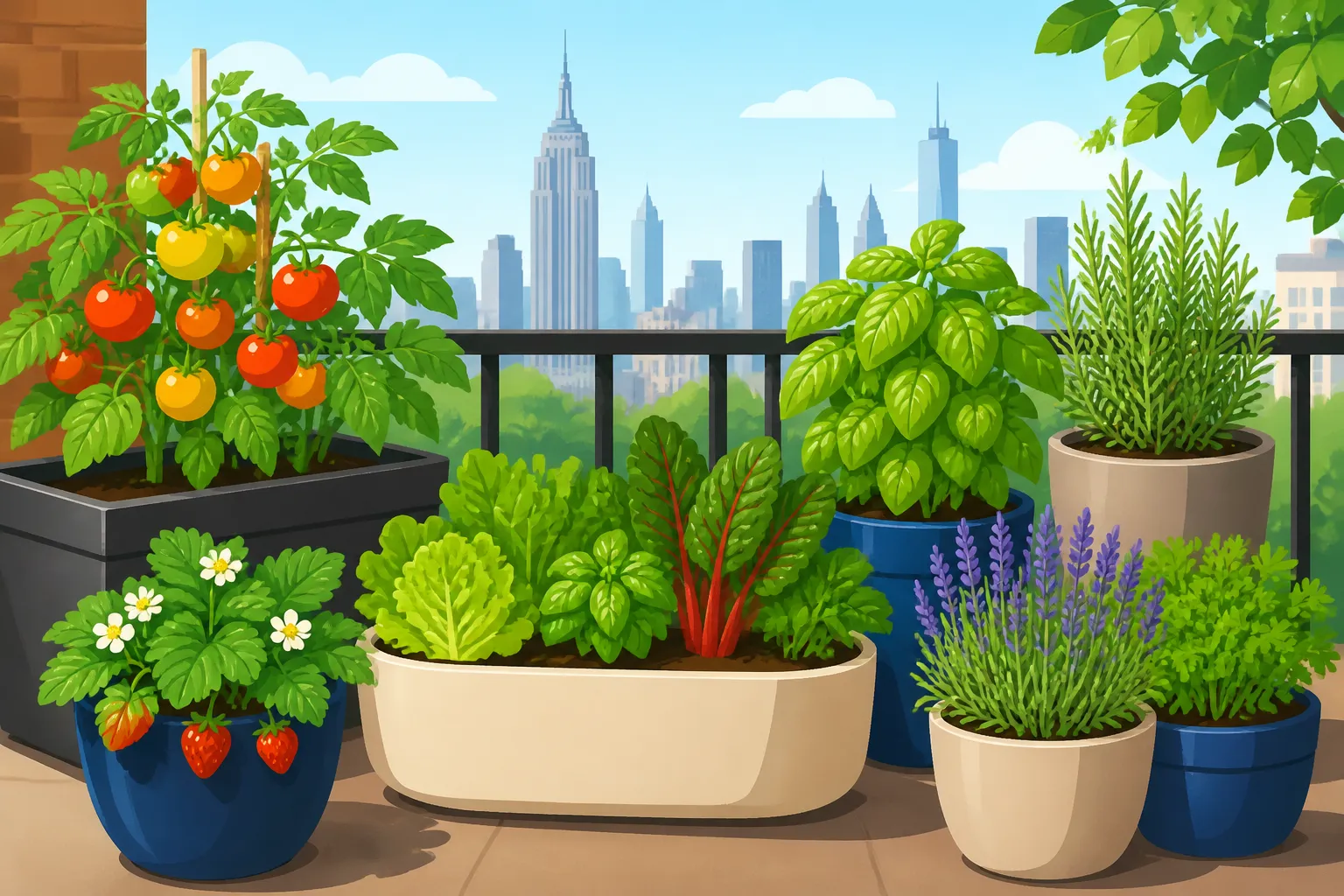
| Crop or herb | Why it can suit a patio planter | What to plan for |
|---|---|---|
| Leaf lettuce | Leaves can be harvested while plants continue growing, and leafy crops can suit less intense light | Keep the growing medium from drying severely; hot conditions can make leafy growth difficult |
| Spinach | A useful leafy crop where conditions are cooler and the light is not at its most intense | It may struggle as weather turns hot |
| Swiss chard | Provides leafy harvests and can be useful where a leafy crop is preferred over a large fruiting plant | Give the plant room to develop and check moisture consistently |
| Radishes | A compact root crop that can fit a smaller planter | Use loose growing medium so roots can develop without obstruction |
| Tomatoes | A familiar choice for a sunny patio and a strong candidate for vertical support | Select a container suited to the plant’s size; plan for support, sun, and frequent moisture checks |
| Peppers | Warmth-loving fruiting plants can make use of a bright, sheltered location | They need adequate light and steady attention to moisture |
| Eggplant | A productive possibility where the patio is warm and sunny | It can become a substantial plant, so allow for its size and support needs |
| Basil | A useful culinary herb for a sunny, warm position | Protect it from cold conditions and avoid letting its pot become persistently dry |
| Parsley | A versatile herb that can be grown for repeated leaf harvests | It needs enough root room and regular moisture |
| Chives | A compact herb that works well in a mixed herb planter or its own pot | Keep it accessible for harvesting and avoid crowding it with larger plants |
| Thyme and oregano | Mediterranean herbs can suit a sunny spot and a growing medium that drains well | Do not treat them like moisture-loving leafy crops |
This comparison is a starting point, not a guarantee. A crop may behave differently depending on the patio microclimate, the size and material of its container, and the growing medium. For more options suited to small spaces, see Container Vegetable Gardening Guide for Small New York Spaces and Crops and Herbs That Thrive in Outdoor Patio Planters is the article you are reading, so do not use that title as a link.
Fruiting crops for sunny patios
Tomatoes, peppers, and eggplant are attractive choices when the patio has strong direct light and enough warmth. They take more planning than compact greens because the plants can grow large, need space for their roots, and may need support. Before planting, consider the mature plant rather than the seedling’s small size. A young tomato can look easy to fit into a corner; a mature plant may crowd nearby pots or shade them.
Choose a container and support system that can handle the plant as it grows. If you plan to move a pot, account for its weight once filled and watered. Keep the crop in a position where you can reach it for watering and harvesting. If the patio is windy, a sheltered spot and secure support become especially important.
Warm-season crops should be planted only when local conditions suit them. New York weather varies, and a patio can be warmer or cooler than the surrounding area. Use local frost information and the plant’s needs rather than assuming that a sunny surface is always safe. The guides Setting Out Warm-Season Vegetables After Spring Frosts and Safe Dates for Setting Out Peppers and Eggplant Across New York offer more detail on planning for those crops.
Leafy crops and quick harvests
Leaf lettuce, spinach, and Swiss chard can be useful where a patio gardener wants leaves rather than large fruiting plants. They can also make sense in a space with less intense sun, although the amount of light still affects their growth. Choose a pot that gives roots room and makes harvesting easy. A planter that is too shallow or crowded can dry rapidly and leave little space for healthy growth.
Radishes are another option for a compact planter, provided the growing medium is loose enough for roots to develop. Greens and roots can be sown in succession when conditions are suitable, so a container does not have to remain empty after a harvest. Succession planting means starting another crop after an earlier crop is harvested or finished, rather than relying on a single planting for the whole season. For help planning repeated sowings, see Succession Planting Calendars for Summer and Autumn Crops.
Herbs for easy access
Herbs are especially convenient on a patio because they can be harvested close to the kitchen. Basil, parsley, chives, thyme, and oregano are all possibilities, but they do not all want identical conditions. Group plants with similar light and moisture needs rather than packing every herb into one pot. Basil and parsley, for example, should not automatically be managed like drought-tolerant herbs that prefer faster drainage.
A mixed planter can work if each herb has enough space and the container drains well. Separate pots give more control over watering and make it easier to move plants to different light conditions. If one herb needs more frequent moisture than another, keeping them apart can prevent the drier-growing plant from staying too wet. For broader herb choices and growing advice, see Growing Culinary Herbs in New York: From Windowsill to Garden and Reliable Culinary Herbs to Start With in New York Gardens.
Cornell Garden-Based Learning at Cornell University links to Vegetable and Herb Gardening in Containers (pdf) for additional container-growing guidance.
Set up containers for healthy roots
A planter is a growing environment, not just a decorative holder. Its drainage, volume, material, and location affect how roots receive water and air. Get these basics right before filling the pot, because changing them later can be awkward and may disturb established plants.
Drainage comes first
Use a container that allows excess water to escape. If water remains trapped around the roots, plants can struggle even when the surface appears dry. A decorative outer pot can be used, but make sure the planted container can drain and that standing water is not left around its base. Set pots where runoff will not create a problem.
Do not assume that adding a layer of stones at the bottom fixes poor drainage. The whole container and its growing medium need to allow water to move through. If the pot has no drainage opening, choose a different planter or use it as an outer cover for a draining pot. For more about choosing a suitable planter, see Drainage Hole Spacing to Prevent Waterlogging in Veggie Pots.
Give roots enough room
Match container size to the crop’s expected growth. A small pot can dry quickly and restrict root development, while a large planter can be difficult to move and may take up valuable patio space. Fruiting plants usually need more room than a small herb, and tall crops need stability as well as root space. Check the plant’s needs before planting rather than using a single pot size for every crop.
Planter depth matters for root crops and other plants that grow below the surface. Radishes need loose, unobstructed growing medium; a pot that is too shallow or crowded can lead to poor root development. Leafy herbs and greens also need enough space to establish roots and draw on moisture between waterings. The guide Choosing Potting Soils for Container Vegetables in New York can help with selecting a growing medium for food crops.
Use a suitable growing medium
Garden soil from the ground may become dense in a container and may not drain the way a pot needs. Use a growing medium intended for containers, and avoid packing it tightly around roots. A loose medium helps water move through while leaving space for roots and air. It should also hold enough moisture to keep plants from drying out immediately.
Container plants draw on a limited amount of growing medium, so its condition matters throughout the season. As plants grow, roots occupy more of the pot and the medium can settle. Water gently after planting so the medium settles around roots without washing them out. If the potting mix pulls away from the sides or water runs straight through, check that it is still absorbing moisture evenly.
Arrange plants before planting
Set empty pots in place first and check the layout at different times of day. Leave access for watering and harvesting, and keep taller plants from blocking light to shorter crops. If you are using a trellis, place it where it will not make a narrow walkway difficult to use. Consider whether the structure can be anchored securely and whether it could catch strong wind.
Avoid overcrowding a mixed planter just to fit more plants into a small space. Crowded foliage can limit airflow and make it harder to inspect leaves or reach the soil. A few healthy, accessible plants are generally easier to manage than a packed container in which every plant competes for light and moisture.
Water and care for patio planters
Container plants rely on the growing medium in their pot, so moisture can change faster than it does in a garden bed. A sunny, breezy patio and a small container may dry rapidly, while a larger pot in a sheltered position may stay moist longer. The useful habit is to check the actual pot and respond to its condition, not to water every container by the same routine.
Check moisture rather than guessing
Look at and feel the growing medium before watering. The surface alone can be misleading: it may look dry while the medium below remains moist, or it may conceal a dry root area. Pay attention to how quickly pots change after warm or windy weather. Wilting can signal dryness, but plants can also wilt when roots are stressed by excess water or heat, so check the medium before adding more.
Water the growing medium rather than relying on a light spray over the leaves. Apply water so it reaches the root area, then allow excess to drain. If a pot dries quickly, consider whether the container is too small, exposed to wind, or positioned in reflected heat. A more sheltered location or a larger, appropriate planter may make care easier.
The guide Watering Container Crops When Pots Dry Faster in Summer focuses on this challenge. For additional signs to look for, see Signs Your Backyard Garden Beds Need Supplemental Water; the same basic principle applies to planters: observe the plant and growing medium rather than following a rigid schedule.
Watch for heat and wind stress
Patio planters can heat up quickly, especially when pots sit on a sun-warmed surface or next to a reflective wall. If leaves look scorched or plants wilt during the hottest part of the day, check the moisture and consider whether the pot needs a more sheltered position. Afternoon shade can help some leafy crops in a hot location, while fruiting plants may need the brightest suitable spot available.
Wind can make a container lose moisture and can damage foliage. Tall plants may need sturdy support, and light containers may need to be placed securely. If a plant repeatedly leans or its leaves are being battered, address the exposure rather than assuming it needs more water. A well-positioned planter is easier to care for than a crop continually exposed to conditions it cannot tolerate.
Keep harvesting and inspecting
Harvest leafy herbs and greens in a way that leaves healthy growth behind, and check plants regularly for changes in leaf color, pests, or wilting. Containers make inspection convenient because the plants are close at hand, but crowding can hide problems. Remove spent or damaged plant material when appropriate, and keep the growing area tidy so you can see the soil and stems.
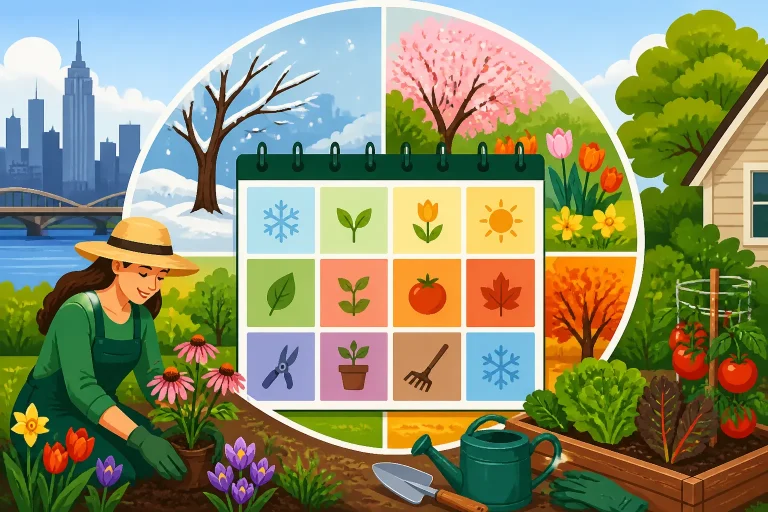
A compact planting can also be easier to rotate or refresh. When a crop finishes, clear the planter and decide whether to replant, grow a different crop, or leave it unused until conditions suit another choice. Avoid assuming every crop should be replaced immediately; match the next planting to the light and weather at that point in the season. For seasonal planning across the state, Month-by-Month New York Home Garden Calendar and Checklist can help connect patio tasks with the broader gardening year.
Build a practical patio planting plan
Start with the conditions you have, then choose crops that fit the space and the time you want to spend caring for them. A small, sunny patio might suit a fruiting crop in a stable planter alongside herbs in separate pots. A partly shaded patio may be better for leafy crops and herbs that tolerate less intense light. In either case, avoid treating a patio as if every pot shares the same exposure.
Match plant groups to their needs
It is tempting to group plants by appearance, but grouping by growing needs is more useful. Put crops that like bright conditions together, and keep plants that need more frequent moisture where you can check them easily. If a combination has conflicting needs, split it into separate pots. That gives you more control without requiring a complicated setup.
Consider how much space each plant will occupy as it matures. Keep vigorous or tall crops from shading small greens and herbs. Add support before a plant becomes large enough to be difficult to handle. If you are unsure what a crop will need, check its mature size and growing instructions before buying it.
Make room for a second planting
Some planters can support another crop after an earlier planting is harvested or removed. This is especially useful for compact greens and herbs, although suitability depends on the remaining season and local conditions. Refresh the growing medium as needed and choose a follow-up crop that fits the light and temperatures available. A planting calendar can help you avoid sowing a crop too late to establish well.
New York’s growing conditions vary by location, so a statewide schedule is only a starting point. Use your local weather and the needs of the crop to make the final decision. The resources Adjusting Vegetable Planting Dates for Your Local New York County and How Milder and Cooler New York Regions Shift Your Sowing Calendar explain why gardeners should adapt timing to their area rather than rely on one date for the entire state.
Keep the plan simple enough to maintain
Choose crops you actually want to eat or use. A few pots of herbs may be more rewarding than a crowded collection of vegetables that need more attention than you can provide. If you are new to container gardening, begin with crops suited to the light and space available, then add more once you understand how quickly the pots dry and how much care they require.
A workable patio plan includes access to water, safe drainage, adequate light, and a place to support plants that need it. It also leaves enough room to harvest and inspect foliage. Container gardening does not remove the effects of weather, but it gives you flexibility to position plants, change the mix of crops, and make the most of a small outdoor area.
Frequently Asked Questions
What vegetables are easiest to try in patio planters?
Leaf lettuce, spinach, Swiss chard, and radishes can be good candidates where their light, root space, and moisture needs are met. Tomatoes, peppers, and eggplant are options for a sufficiently sunny, warm patio, but they need more room and support.
Can herbs and vegetables share the same planter?
They can if they have compatible light and moisture needs and enough room to grow. If one plant needs consistently moist conditions while another prefers faster drainage, separate pots make care easier.
How often should patio planters be watered?
There is no single schedule that suits every pot. Check the growing medium and consider the container, weather, wind, and exposure before watering. Pots in sunny or breezy places may dry sooner than sheltered containers.
Can vegetables grow on a partly shaded patio?
Some leafy crops and herbs may be suitable, but reduced light can limit growth. Fruiting crops generally need a sunnier location. Observe the actual light at the planting spot and choose crops to match it.
Should I use garden soil in a patio planter?
A container growing medium is generally a better fit because it is made for use in pots. Ground soil may become dense in a container and may not drain or hold air as roots need.
Sources
- Cornell Garden-Based Learning, Cornell University — Food Gardening | Cornell Garden-Based Learning (checked November 14, 2026)
Disclaimer
This article is for general informational purposes only and does not constitute professional advice. Laws, prices and regulations vary by location and change over time. Consult a qualified professional for guidance on your specific situation. New York Gardening Guide is not a government agency and is not affiliated with any university extension, state department of agriculture or other government agency.